
Understanding Your BER Certificate: How to Read It and What It Really Means for Your Home
Your BER (Building Energy Rating) certificate can feel a bit like a school report you never asked for: letters, numbers, charts, and a list of “recommendations” that may or may not make sense for your home.
But once you know what you’re looking at, a BER is genuinely useful. It helps you understand how your home is performing today, what’s driving your energy costs, and which upgrades are likely to make the biggest difference.
In this guide, we’ll break down the key sections of a BER certificate, explain what the A-G rating means in practical terms, and show how to use the recommendations to plan a sensible retrofit.
What is a BER certificate (and what is it used for)?
A BER certificate is an assessment of a home’s energy performance. It estimates how much energy your home needs for:
- Space heating
- Water heating
- Ventilation
- Lighting
The BER rating (A-G): what it means in real life
The headline letter rating is the part most people remember:
- A-rated homes are typically well insulated, airtight, and use efficient heating (often heat pumps) – they tend to feel more comfortable and cost less to run.
- B and C ratings often indicate a home that has had some upgrades, but may still have opportunities to reduce heat loss or improve heating controls.
- D to G ratings usually point to higher heat loss, older heating systems, and bigger opportunities for improvement.
A key point: the BER is based on a standardised calculation, not on your actual bills. Two homes with the same BER can have different real-world costs depending on occupancy, thermostat settings, and how the home is used.
How to read a BER certificate: the main sections explained
Different BER certificates can look slightly different, but most include the same core information.
1) The property details
This section confirms what was assessed (address, dwelling type, floor area, and sometimes construction type). It’s worth checking this for accuracy – especially the floor area and dwelling type – because these details can affect the calculation.
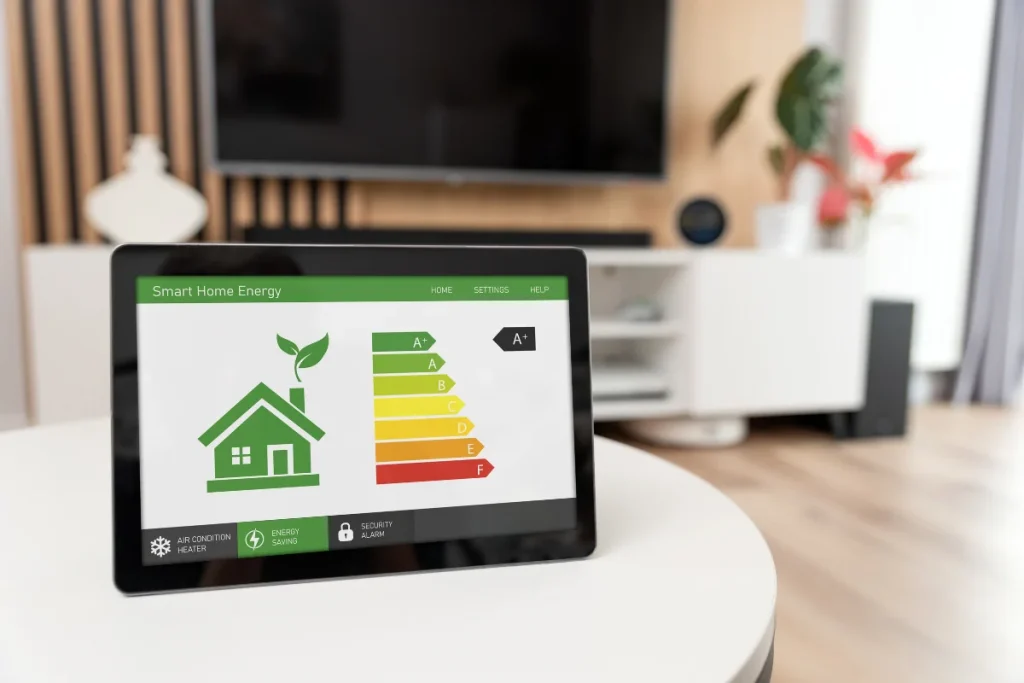
2) The BER rating chart
You’ll see a chart showing where your home sits on the A-G scale. This is useful as a quick benchmark, but it’s not the whole story.
If you’re planning upgrades, the more important question is often:
- What’s causing my home to lose heat?
- Which improvements will move the needle most?
3) Energy performance indicators (the numbers behind the letter)
Your cert will include one or more numerical indicators (often shown as energy use per square metre). This is the “maths” behind the letter rating.
In plain English:
- Lower numbers generally mean a more efficient home.
- Higher numbers generally mean more energy is needed to keep the home warm and provide hot water.
If you’re comparing two homes, these figures can be more informative than the letter alone.
4) Estimated energy costs
Many BER certs include an estimated annual energy cost. This can be helpful for a rough comparison, but remember:
- It’s based on standard assumptions.
- Your actual bills depend on how you heat the home, how long it’s occupied, and energy prices.
Treat it as a guide – not a guarantee.
5) The building fabric and systems (what your home is made of)
This is where the BER starts to become really useful for retrofit planning. The assessment considers things like:
- Attic/roof insulation
- Wall type and insulation (cavity, internal, external)
- Windows and doors
- Airtightness/ventilation approach
- Heating system type and efficiency
- Heating controls
- Hot water cylinder and insulation
- Renewable technologies (e.g., solar PV)
If your home is older, it’s common to see the rating held back by one or two major factors – for example, uninsulated walls, older glazing, or an inefficient boiler.

BER recommendations: how they’re prioritised (and how to use them)
Your BER advisory report will list recommended upgrades. These are usually presented in an order that reflects typical impact and logic – but it’s still important to apply common sense.
A practical way to think about recommendations is:
- Reduce heat loss first (insulation and draught-proofing where appropriate)
- Then improve heating efficiency (controls, emitters, and heating system upgrades)
- Then add renewables (like solar PV) to reduce running costs further
- Don’t ignore ventilation – a warmer, more airtight home needs the right ventilation strategy
Why “insulation first” is important
Upgrading heating without addressing heat loss can mean:
- Higher running costs than necessary
- Comfort issues (cold spots, drafts)
- A heating system that’s working harder than it should
That’s why many retrofit plans focus on getting the home “heat pump ready” before installing a heat pump.
Common misconceptions about BER ratings
A few misunderstandings come up again and again:
- “My BER is low, so I must have a bad house.” Not at all. Many Irish homes were built before modern insulation standards. A lower BER often just means there’s a clear opportunity to improve comfort.
- “If I improve one thing, my BER will definitely jump.” Sometimes it does – but often the best results come from a package of measures that work together.
- “A BER is the same as my actual energy bills.” A BER is a standardised model. Your bills depend on lifestyle and usage.
- “The recommendations are a to-do list I must follow in order.” They’re a guide. The right sequence depends on your home, budget, and goals.
How a BER assessment helps identify retrofit opportunities
A BER assessment doesn’t just produce a rating – it highlights where energy is likely being lost and what improvements could deliver the best return.
For many homeowners, the BER is the first time they see their home described in terms of:
- Heat loss through roof/walls/windows
- Heating system efficiency
- Control and zoning
- Ventilation approach
That makes it a useful “baseline” before you invest.
What a “good” BER improvement looks like (and what affects it)
Homeowners often ask what kind of BER improvement is possible. The honest answer is: it depends.
Your starting point matters (for example, a D-rated home may have more easy wins than a B-rated home), and so does the scope of works.
Typical factors that influence BER improvement include:
- Whether walls can be insulated (and which method is suitable)
- The condition and insulation level of the attic
- Window/door performance
- Heating system type and controls
- Airtightness and ventilation upgrades
The best approach is to plan upgrades as a joined-up project, so each measure supports the next.

Using your BER to plan a retrofit: a simple next step
If you have a BER certificate already, here’s a practical way to use it:
- Read the recommendations and highlight the top 3-5 measures that feel most relevant.
- Think in terms of comfort problems, not just ratings (cold rooms, condensation, uneven heat, high bills).
- Ask for a plan that sequences the work properly and avoids doing work twice.
How Leetherm can help
Leetherm is an SEAI-registered One Stop Shop, which means we can help homeowners plan and deliver a complete home energy upgrade – from assessing the right measures, to coordinating the works, to supporting the grant process.If you’d like help understanding your BER certificate (or you’re not sure which recommendations to prioritise), get in touch and we’ll talk you through the options for your home.
